Mila Robot Learning Seminar
The Robotics and Embodied AI Lab and Mila are hosting the Fall 2026 edition of the Mila Robot Learning Seminar; a set of virtual talks by researchers in this field. Seminars usually take place at 11:00 Eastern time on Thursdays and are streamed on our YouTube channel.

We have an exciting lineup of speakers for this newest edition of the seminar series! Follow us on Twitter for more updates.
|
|
Speaker |
Talk |
YouTube link |
|
|
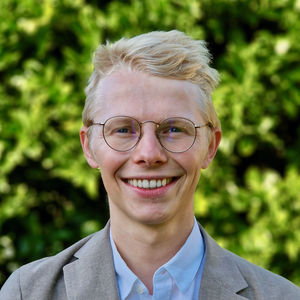
Geometry is the harness of 3D learning
Thu, Oct 8, 2026 · 11:00 AM ET AbstractEnd-to-end learning models for 3D reconstruction offer speed and simplicity, yet they struggle with high-precision tasks and rely on classical systems for their training data. This talk addresses a central debate in the field: are classical SLAM pipelines becoming obsolete, or are they evolving into the essential foundation for neural representations? Rather than abandoning explicit mapping, we argue that classical geometry must serve as the "harness" for prior-rich deep learning models. By mathematically fusing probabilistic state estimation with learned priors, hybrid optimization systems can achieve state-of-the-art robustness and accuracy. We also challenge the pervasive myth that geometric optimization is inherently too slow by demonstrating highly optimized modern bundle adjustment techniques. Ultimately, much like Large Language Models utilizing external calculators for precise arithmetic, next-generation 3D foundation models must leverage explicit geometric optimization as a dedicated tool, allowing neural networks to focus their capacity on robustness and learned representations. |
||
|
|
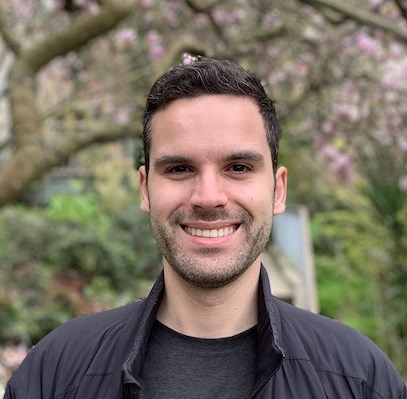
Geometric Priors for Dense SLAM
Thu, Oct 15, 2026 · 11:00 AM ET AbstractDense monocular simultaneous localization and mapping (SLAM) is the task of obtaining a dense 3D reconstruction from a single camera while maintaining real-time performance, handling ambiguity, and ensuring consistency over long horizons. In this talk, we discuss learned priors and representations for dense monocular SLAM. We first show how moving beyond a single estimate of depth to a structured distribution can mitigate bias, enable compact representations, and achieve 3D consistency. We then demonstrate how feed-forward reconstruction models can be used to build a general, robust, and scalable SLAM system. Next, we examine multi-view feed-forward reconstruction models as implicit priors that provide a coupling between poses and geometry, with latent representations optimized to achieve both robustness and precision. We conclude by discussing the computational structures and parameterizations of priors needed to efficiently model the space of scenes and observers. |
||
|
|
Building Embodied Reasoning Models for Physical AI
Thu, Oct 22, 2026 · 11:00 AM ET AbstractEverything that moves will be automated. Alpamayo is NVIDIA’s open Physical AI platform striving to make that future possible. I'll begin this talk with an overview of Alpamayo and its "Agentic Factory," an automated development loop that connects ideas to data, models, training, and evaluation. We’ll then take a look inside that loop: how reasoning traces are autolabeled to create useful supervision; how new model architectures explore reasoning representations and world understanding while balancing efficiency and interpretability; how simulation enables closed-loop evaluation and training; and how agents help design experiments and judge results. Finally, I’ll share our latest results on generalizing across autonomous driving and robotics, including how the same development workflow can adapt to different embodiments. |
||
|
|
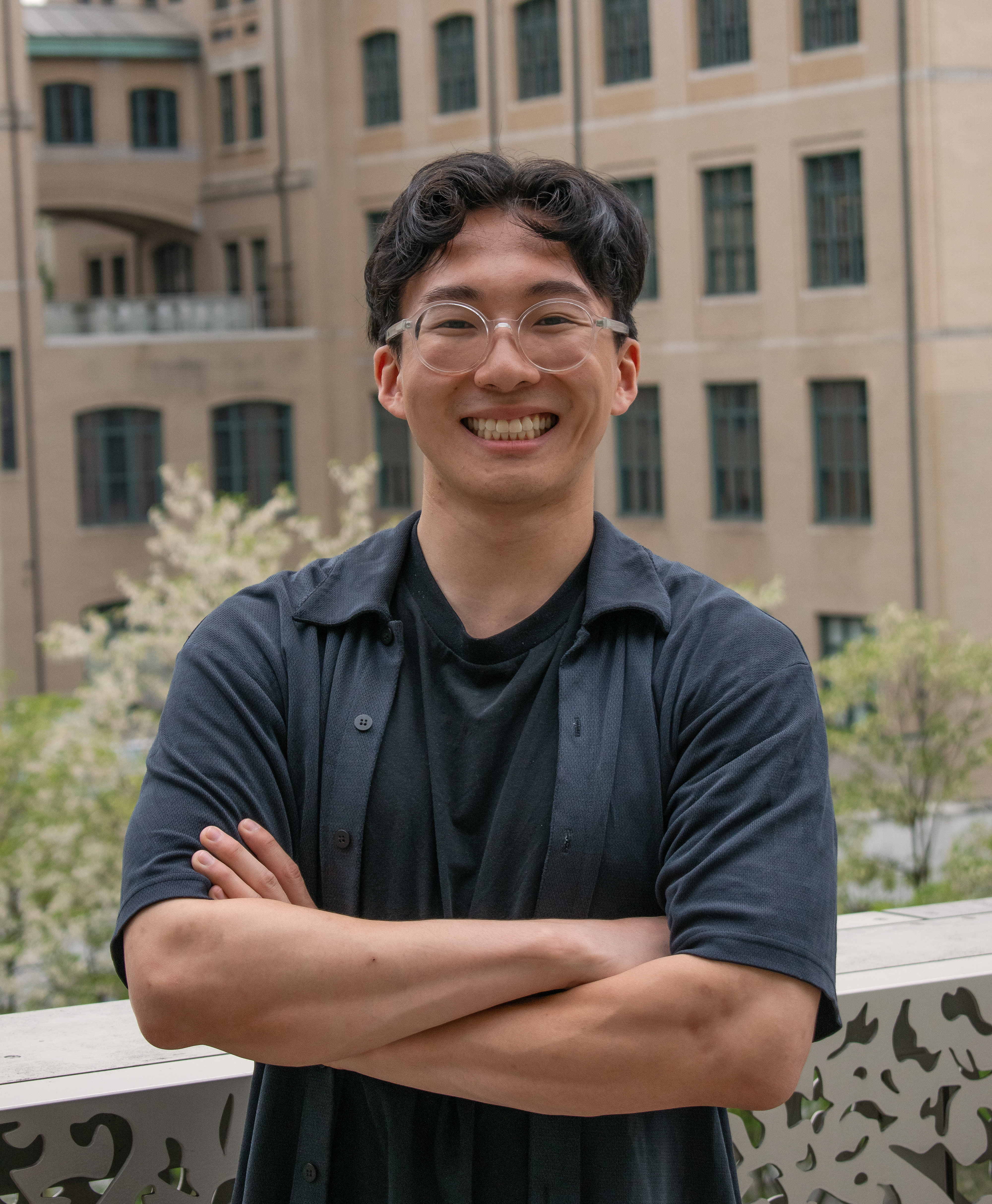
Perceiving, Predicting, and Planning Physical Interaction in Observation-Centric Coordinates
Thu, Oct 29, 2026 · 11:00 AM ET AbstractRobots must predict physical change and plan under uncertainty. This talk explores how expressing task intent and robot actions in observation-centric coordinates enables generalizable manipulation. I present NovaFlow and NovaPlan, which extract actionable 3D motion from generated videos for zero-shot manipulation and closed-loop planning. I then introduce Deform360 for examining the trade-offs between video prediction and explicit 3D particle dynamics. Finally, I present Hydra-0, which represents robot actions as pixel motion to learn action consequences across embodiments and support policy evaluation and control. Together, these efforts connect world models and planning through shared observation-centric interfaces. |
||
|
|
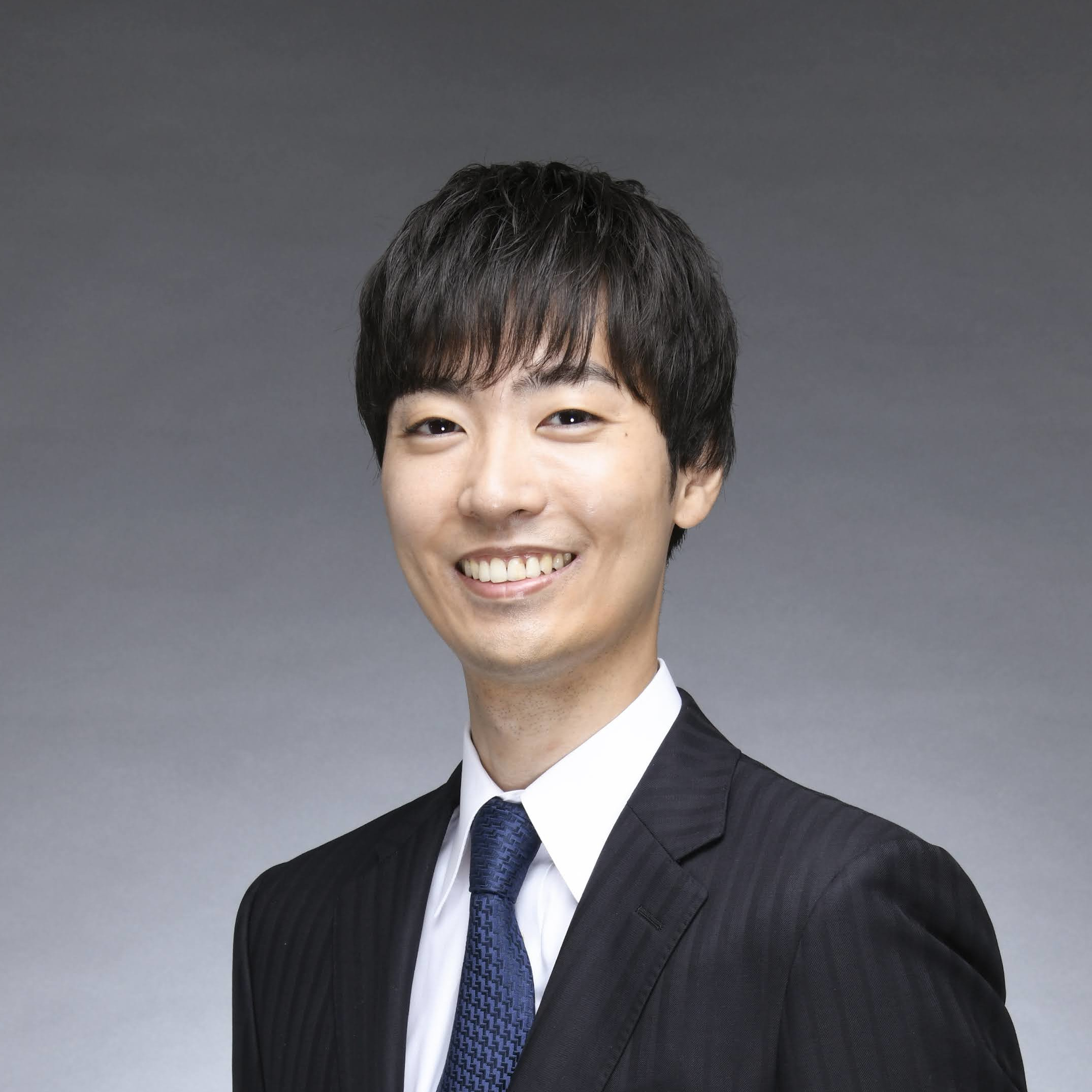
Safety in a Learned World: When and how can world models help keep robots safe?
Thu, Nov 5, 2026 · 11:00 AM ET AbstractAs robot policies operating from high-dimensional visual observations become increasingly capable, they will encounter safety constraints—such as avoiding spills, breakage, or overheating—that are difficult to express using conventional state and dynamics models. This talk explores when and how learned world models can help bridge that gap. I will begin by introducing latent safety filtering, a framework that performs safety analysis within a learned world model to enable robots to respond safely to these hard-to-model constraints. |
||
|
|
Towards Trustworthy Deployment of Large Behavior Models
Thu, Nov 12, 2026 · 11:00 AM ET AbstractAs large generalist policies grow increasingly capable, expectations for their deployment also rise. However, ensuring a path toward trustworthy deployment is essential before this technology can safely benefit humans. This requires rigorous policy evaluation to verify positive progress over time, timely failure detection, and elastic adaptation to specific deployment conditions without forgetting previously learned behaviors. This talk presents recent research from the Trustworthy Learning under Uncertainty team at Toyota Research Institute, focusing on policy evaluation, failure detection, and adaptation for large behavior models in challenging environments. |
||
|
|
Thu, Nov 19, 2026 · 11:00 AM ET |
||
|
|
Thu, Nov 26, 2026 · 11:00 AM ET |
||
|
|
Thu, Dec 3, 2026 · 11:00 AM ET |
||
|
|
Thu, Dec 10, 2026 · 11:00 AM ET |
||
|
|
Robots That Feel: Vision, Touch, and Learning for Dexterous Manipulation
Thu, Dec 17, 2026 · 11:00 AM ET AbstractRobots are increasingly capable of seeing and reasoning about the world, yet they still struggle with the physical interactions that people perform effortlessly: grasping, using tools, and adapting when things don't go as planned. In this talk, I will present our work on robots that combine vision, touch, and learning to manipulate objects in contact-rich settings. I will discuss how tactile sensing and physics-informed models make robot policies more reliable, how large-scale pretraining and language can help robots recover from errors and generalize across tasks, and how these ideas carry over to applications in manufacturing and logistics. I will close with lessons from deploying manipulation systems at scale and the open problems that remain in closing the gap between broadly capable models and dependable robots. |