Fall 2025
Organized by Miguel Saavedra-Ruiz, Daniel Lawson, and Liam Paull.
The Robotics and Embodied AI Lab and Mila hosted the Fall 2025 edition of the Mila Robot Learning Seminar; a set of virtual talks by researchers in this field. We had an exciting lineup of speakers for this edition of the seminar series!
|
|
Speaker |
Talk |
YouTube link |
|
|
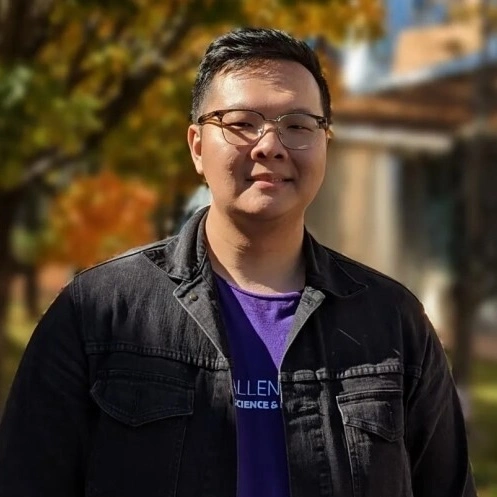
Jiafei Duan
PhD Student University of Washington Graduate Student Researcher Allen Institute for AI (AI2) |
Towards Robotics Foundation Models that can Reason
Thu, Oct 9, 2025 · 11:00 AM ET AbstractIn recent years, we have witnessed remarkable progress in generative AI, particularly in language and visual understanding and generation. This leap has been fueled by unprecedentedly large image–text datasets and the scaling of large language and vision models trained on them. Increasingly, these advances are being leveraged to equip and empower robots with open-world visual understanding and reasoning capabilities. Yet, despite these advances, scaling such models for robotics remains challenging due to the scarcity of large-scale, high-quality robot interaction data, limiting their ability to generalize and truly reason about actions in the real world. Nonetheless, promising results are emerging from using multimodal large language models (MLLMs) as the backbone of robotic systems, especially in enabling the acquisition of low-level skills required for robust deployment in everyday household settings. In this talk, I will present three recent works that aim to bridge the gap between rich semantic world knowledge in MLLMs and actionable robot control. I will begin with AHA, a vision-language model that reasons about failures in robotic manipulation and improves the robustness of existing systems. Building on this, I will introduce SAM2Act, a 3D generalist robotic model with a memory-centric architecture capable of performing high-precision manipulation tasks while retaining and reasoning over past observations. Finally, I will present MolmoAct, AI2’s flagship robotic foundation model for spatial reasoning, designed as a generalist system that can be post-trained for a wide range of downstream manipulation tasks. |
|
|
|
Learning World Models and Physical Agents
Wed, Oct 15, 2025 · 12:30 PM ET AbstractGiven a low-cost environment with accurate dynamics and reward, we have trained agents that can achieve superhuman performance (e.g., AlphaGo, LLM for ICPC). However, robot interactions with the physical world incurs high cost, making learning physical agents difficult. In this talk, we will discuss how to learn a world model from large-scale real-robot interaction data. We then discuss how the world model can be used to evaluate real-robot policies efficiently and effectively, including testing out-of-distribution settings with novel objects and distractors. Lastly, we will discuss how to use the world model to perform reinforcement learning and planning to further improve robot policies as physical agents. |
||
|
|
Jiayuan Mao
Assistant Professor University of Pennsylvania Research Scientist Amazon Frontier AI & Robotics |
Learning, Reasoning, and Planning with Neuro-Symbolic Concepts
Thu, Oct 16, 2025 · 11:00 AM ET AbstractI aim to build complete intelligent agents that can continually learn, reason, and plan: answer queries, infer human intentions, and make long-horizon plans spanning hours to days. In this talk, I will describe a general learning and reasoning framework based on neuro-symbolic concepts. Drawing inspiration from theories and studies in cognitive science, neuro-symbolic concepts serve as compositional abstractions of the physical world, representing object properties, relations, and actions. These concepts can be combinatorially reused in flexible and novel ways. Technically, each neuro-symbolic concept is represented as a combination of symbolic programs, which define how concepts can be structurally combined (similar to the ways that words form sentences in human language), and modular neural networks, which ground concept names in sensory inputs and agent actions. I show that systems that leverage neuro-symbolic concepts demonstrate superior data efficiency, enable agents to reason and plan more quickly, and achieve strong generalization in novel situations and for novel goals. This is illustrated in visual reasoning in 2D, 3D, motion, and video data, as well as in diverse decision-making tasks spanning virtual agents and real-world robotic manipulation. |
|
|
|
Humanoid Robot Learning
Thu, Oct 23, 2025 · 11:00 AM ET AbstractHumanoid robots represent the ideal physical embodiment to assist us in the diversity of our daily tasks and human-centric environments. Driven by substantial hardware advancements, progress in artificial intelligence (AI), and a growing demand for adaptable automation, this vision appears increasingly feasible. Yet, humanoid intelligence remains far from achieving the envisioned general-purpose capabilities. In this talk, I will discuss the unique challenges humanoids pose in the robot learning setting and present approaches to scale learning through novel tools (HumanoidBench, MuJoCo Playground), flexible algorithms (OmniRetarget, FastTD3), and expressive architectures (Body Transformer). |
||
|
|
Long-Horizon Mobile Manipulation in the Wild
Thu, Nov 6, 2025 · 11:00 AM ET AbstractLong horizon mobile manipulation in real environments requires robots to perceive dynamic scenes, plan over long timescales, and act with reliable dexterity under uncertainty. This talk presents recent methods for open world tasks by combining language conditioned goal specification, object and articulation aware representations, and hierarchical policies that couple task and motion planning with reactive control. Results on long horizon mobile manipulation across homes, labs, and warehouses show reliable performance on tasks such as tidying, assembly, and tool use, along with safe recovery behaviors and human in the loop supervision. |
||
|
|
Robust Autonomy Emerges from Self-Play
Thu, Nov 13, 2025 · 11:00 AM ET |
||
|
|
Open World Navigation and Memory for Agentic Robots
Thu, Nov 20, 2025 · 11:00 AM ET AbstractAgentic reasoning for robots is rapidly becoming a reality, allowing flexible natural language interaction with human operators and enabling a wide range of navigation, object handling and recall tasks in a variety of settings. In this talk, Prof. Waslander will discuss the ongoing efforts in his lab to make useful agentic robots for the warehouse and outdoor setting, by integrating open world perception with agentic reasoning for reliable open world navigation, and by adding multi-faceted memory - spatial, descriptive and visual - to enable experience recall for temporal question answering. Together, these advances allow a wide variety of spatial, semantic, functional and temporal tasks. |
||
|
|
Embodied Multimodal Intelligence with Foundation Models
Thu, Nov 27, 2025 · 11:00 AM ET AbstractDespite considerable progress in robot learning, most real-world robots remain confined to a narrow set of preprogrammed behaviors, falling short of public expectations. As robots become more ubiquitous in human-centered environments, the need for “generalist” robots grows: how can we scale robot learning systems to generalize and adapt, enabling them to perform a wide range of everyday tasks in unstructured settings based on arbitrary user instructions? In this talk, I will discuss the challenges and opportunities in building robot foundation models and outline the key ingredients for developing generalist robot policies—including cross-embodied learning, multimodal alignment, and scalable learning and evaluation procedures. I will present the first instantiation of such a model, capable of performing bimanual manipulation, visual navigation, quadruped locomotion, single-arm manipulation, and even aviation. I will then discuss how this model serves as a pre-trained backbone for downstream tasks, including humanoid control. Finally, I will show how incorporating intelligent reasoning not only enables robots to use common sense to think before acting, but also significantly enhances their generalization, interpretability, and ability to interact effectively with humans. |
||
|
|
Resource-Rational Robot Intelligence
Thu, Dec 4, 2025 · 11:00 AM ET AbstractWith robots achieving remarkable feats in controlled demonstrations, the next frontier is deploying them widely in unstructured, human-centric environments. This demands exceptional robustness, efficiency and continual learning so that robots can safely adapt to novel, evolving conditions. In my talk, I will show how resource-rational robots, that learn and plan to provably minimize the cost of data and computation, offer a promising path towards widespread deployment. I will present metareasoning algorithms that deliberate about what to learn, and how to allocate scarce resources like time and human assistance at deployment time. I will also discuss planning and reinforcement learning algorithms that leverage learned policies as informative priors to rapidly generalize to new tasks and environments. |
||
|
|
Visual Localization and Mapping as the 3D Geometric Grounding of Foundation Model Representations
Thu, Dec 11, 2025 · 11:00 AM ET AbstractLocalization and mapping are fundamental capabilities for enabling autonomy in robotics. While both have been active research areas for several decades, the current convergence of mature geometric methods with emerging deep learning models has the potential to hugely expand their scale and representational power. In this talk, I will present recent works, primarily from my group, that address tasks within localization and mapping as the 3D grounding of representation embeddings, either directly using foundation models or fine-tuning them for the task. Specifically, I will discuss 1) visual place recognition, where we achieve substantial gains by leveraging DINOv2 and 3D-aware mining, 2) open-vocabulary mapping, where we register single-image vision-language foundation model representations to produce semantic maps, 3) multi-view stereo, where we show strong zero-shot generalization with contributions in both model architecture and training, and 4) single-view intrinsics, where we propose a unified approach for calibrating "any" camera in the wild. |
||
|
|
Safe and Deployable Reinforcement Learning for Reason and Action
Thu, Dec 18, 2025 · 11:00 AM ET AbstractAI agents that can learn decision-making grounded in their own experience will eventually surpass the abilities of agents that learn only from static datasets. Reinforcement learning (RL) is one of the primary mechanisms in AI for creating agents that learn from trial-and-error how to best achieve their goals. In this talk, I will give an overview of my lab’s research in reinforcement learning (RL) and scaling it toward real-world applications. The talk will have three parts. In the first, I will discuss challenges and solutions that arise when integrating RL into complete robotic systems based on my lab’s work using RL to compete in the robot soccer domain. In the second, I will discuss the challenge of building confidence in AI agents before their decisions have real-world consequences. Finally, I will discuss the use of RL to train LLMs how to “reason” and how this approach suggests an exciting new direction for creating agents that simultaneously learn to reason and act. |